
Are Junk Wax Era Sports Cards Worth Anything?
Most mass-produced sports cards from the late 1980s and early 1990s have low per-card value, but valuable exceptions and large bulk opportunities still exist.

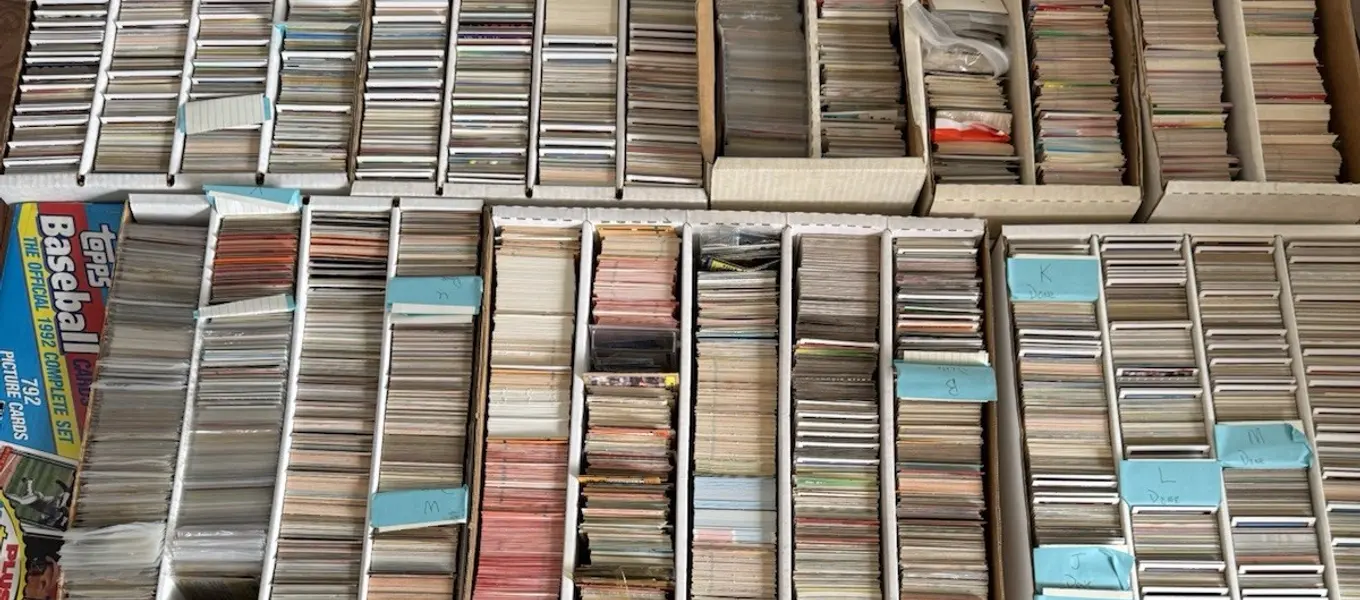
The short answer is yes, some sports cards from the late 1980s and early 1990s are worth money. Most common base cards from the period have low per-card value because manufacturers printed enormous quantities and collectors saved enormous quantities.
That broad truth often gets turned into bad advice. People hear that every card from the period is worthless, then overlook scarce errors, premium issues, inserts, clean key rookies, and sealed product that deserve a closer look.
The right approach is to separate the exceptions from the common material, then judge the remaining bulk by volume rather than by an imagined price for each card.
What The Junk Wax Era Means
Collectors use the term junk wax for the mass-production period that peaked in the late 1980s and early 1990s. The exact dates change by sport and product, so the label should describe the supply problem rather than act as a strict calendar rule.
Base sets from Topps, Donruss, Fleer, Score, Upper Deck, Hoops, Pro Set, and other brands reached a huge audience. Buyers treated cards as collectibles from day one, which means unopened sets and clean stored copies still survive in large numbers.
Why Most Base Cards Have Low Value
Value needs demand and limited supply. Famous players create demand, but a card can stay inexpensive when millions of similar copies exist and many remain in sharp condition.
Complete factory sets face the same issue. An intact set feels special to the owner, but it may compete with thousands of unopened or barely handled sets offered by other sellers.
The Exceptions Worth Pulling
Do not discard the era as one block. Pull the groups below before the rest is counted as bulk, then confirm each card by year, set, number, and variation.
- Key rookies: top players can carry value, especially in scarcer issues or unusually high grades.
- Confirmed errors: a small number of corrected errors and variations have real demand, but many internet error claims do not.
- Premium releases: limited, regional, Tiffany, traded, update, and other premium products can differ from the common base set.
- Inserts and parallels: scarcer chase cards became more important as the 1990s progressed.
- Unopened product: sealed boxes and cases should be checked as products and should not be opened for a quick search.
- Condition outliers: a true top-grade example can sell well, but only when the card already has collector demand.
Why Error Card Claims Need Proof
Online posts often describe common print defects as rare errors. Ink spots, miscuts, fisheyes, missing color from poor printing, and damaged cards may be unusual without being valuable.
A valuable variation needs a confirmed identity and a record of buyers paying more for it. Match the card number, front and back details, correction status, and completed sales before assigning an error premium.
Can Grading Make These Cards Valuable?
Grading can document an exceptional copy, but it does not create demand. Many mass-produced cards are worth less than the grading fee in ordinary condition, and even clean-looking cards can miss the top grade because of centering, surface, edges, or corners.
Check completed sales for the exact card at several grades before paying a fee. Compare the likely sale price with grading, shipping, insurance, selling fees, and the risk of a lower result.
When Junk Wax Bulk Adds Up
Common cards still have bulk value. The total depends on the sport, years, organization, condition, card count, storage, and travel distance. Sorted star and rookie groups can carry more value than completely mixed base cards.
For a bulk-only collection made mostly before 2010, about 100,000 cards is a useful starting point for an in-person pickup. Valuable exceptions can make a smaller collection fit, and a published buy list can give you a clearer starting number for common categories.
How To Check Your Own Boxes
Start with box labels and representative card backs so you know the years and sets. Pull rookies, stars, inserts, numbered cards, sealed product, graded cards, and anything stored apart from the commons.
Then photograph the full amount and the groups you pulled. You do not need to search every common before contacting a buyer, and you should not throw the collection away because a broad era label sounds negative.