
Which UFC Cards Are Worth Money?
UFC card value depends on the fighter, year, product, rookie status, exact parallel, autograph or relic details, serial number, grade, and recent demand.

UFC cards most likely to be worth money combine a collected fighter with a recognized rookie or early card, scarce parallel, certified autograph, premium insert, memorabilia feature, low serial number, or strong grade. A fighter name or rookie logo alone does not guarantee a high sale.
Modern UFC products often use one photograph across a base card and many refractor or color versions. The exact version must be confirmed before using a completed sale.
Identify The Exact UFC Product And Card
Record the year, manufacturer, product, fighter, card number, rookie mark, insert name, parallel, autograph or relic statement, serial number, and grade. Use an official checklist to confirm the set structure when the visual differences are small.
Topps UFC product pages and checklists distinguish base sets, rookies, refractor tiers, inserts, autograph subsets, and relic content. Older products from other manufacturers need their own correct checklist.
| Feature | What To Verify | Why It Matters |
|---|---|---|
| Rookie status | Checklist designation and earlier known issues | Not every early fighter card carries the same demand |
| Parallel | Color, pattern, product name, and checklist | Similar-looking versions can have different supply |
| Serial number | Full stamped number and stated print limit | Confirms the limited version in hand |
| Autograph or relic | Manufacturer statement on the back | Separates certified product content from an added signature or vague material claim |
Rookie And Early Cards Need A Timeline
A fighter may appear in regional, prospect, promotional, print-on-demand, or earlier licensed products before a widely collected mainstream rookie. Check the release history rather than relying only on an RC symbol or marketplace title.
When several early cards exist, buyer preference and completed sales show which issue the market treats as most important. Describe the card accurately even when hobby opinions differ.
Parallels Must Be Named Correctly
A refractor finish, border color, background pattern, or serial stamp may identify a parallel. Some colors repeat across products or years with different print limits. Match the year and product checklist before naming the version.
A one-of-one or low-numbered card has restricted supply, but value still depends on the fighter, product, card design, condition, and number of interested buyers. Scarcity without demand does not create a guaranteed price.
Certified Autographs And Relics Need Back Photos
The card back usually states whether the manufacturer certifies an autograph and how it describes memorabilia. Photograph the full wording. A sticker autograph and an on-card autograph are both product-issued when properly certified, but buyers may respond differently.
A signature added after manufacture is a different item and needs credible authentication. Do not compare it with a manufacturer-certified autograph card just because the same fighter signed both.
Fighter Demand Can Change Quickly
Championship status, results, card appearances, career stage, popularity, and collector attention can affect demand. An active contender may move differently from a retired legend or a fighter between appearances.
Use recent completed sales and more than one result when possible. A sale immediately after a major event may not represent the range several weeks later.
Condition And Grade Still Control Comparability
Modern chrome cards can show fine scratches, print lines, dimples, roller marks, edge chips, dents, and corner wear. Thick autograph or relic cards may have edge and corner damage even when placed directly into a holder.
Compare a graded card with the same grading company and numerical grade. Compare an ungraded card with raw sales showing similar defects. Do not treat a top-grade result as the expected value of every clean-looking copy.
Base Cards Sets And Sealed Boxes Need Separate Review
Common base cards may sell best in fighter lots, sets, or bulk groups. Complete sets can benefit from organization and intact key cards. Sealed boxes should remain closed and be matched by exact product, configuration, seals, and package condition.
Review rookies, stars, parallels, autographs, relics, rare inserts, and graded cards before assigning the remaining collection to groups. This prevents a visually subtle parallel from being lost in ordinary base cards.
Build A UFC Card Value Range
Search the fighter, year, product, card number, rookie status, parallel, serial limit, autograph or relic set, and grade. Remove active asking prices, base versions, unrelated inserts, different grades, and sales with unclear titles.
Use several matched completed sales, then account for condition, shipping, buyer premiums, accepted offers, and demand changes. If no exact sale exists, use the closest credible comparisons and state what differs.
How To Sell A UFC Card Collection
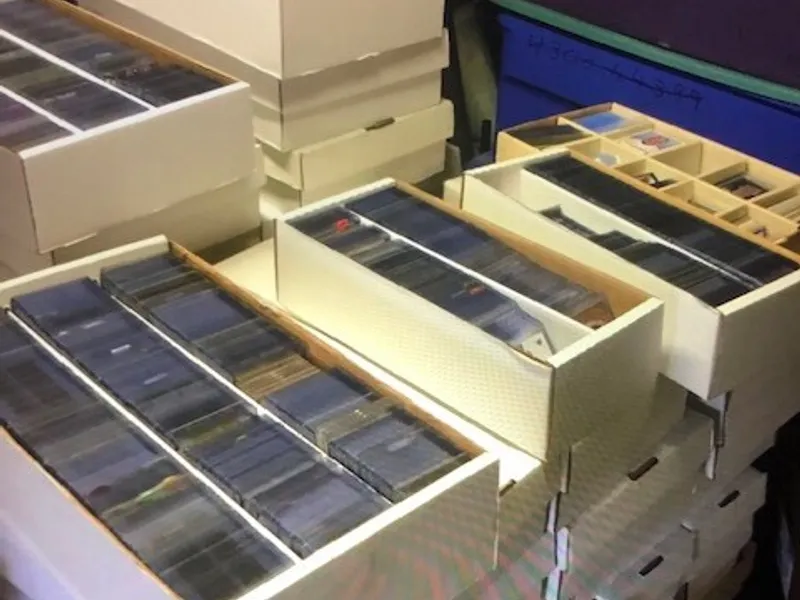
Send wide photos showing the full quantity and storage. Add clear front-and-back images of rookies, major fighters, graded cards, autographs, relics, serial-numbered cards, rare inserts, and sealed products.
We can buy the premium cards and remaining collection together when the overall purchase fits. You do not need to price every base card before contacting us about an in-person cash offer.