
How To Find Sports Card Sold Prices
Find useful completed sales by matching the exact card, grade, condition, sale date, and accepted-offer context instead of relying on asking prices.

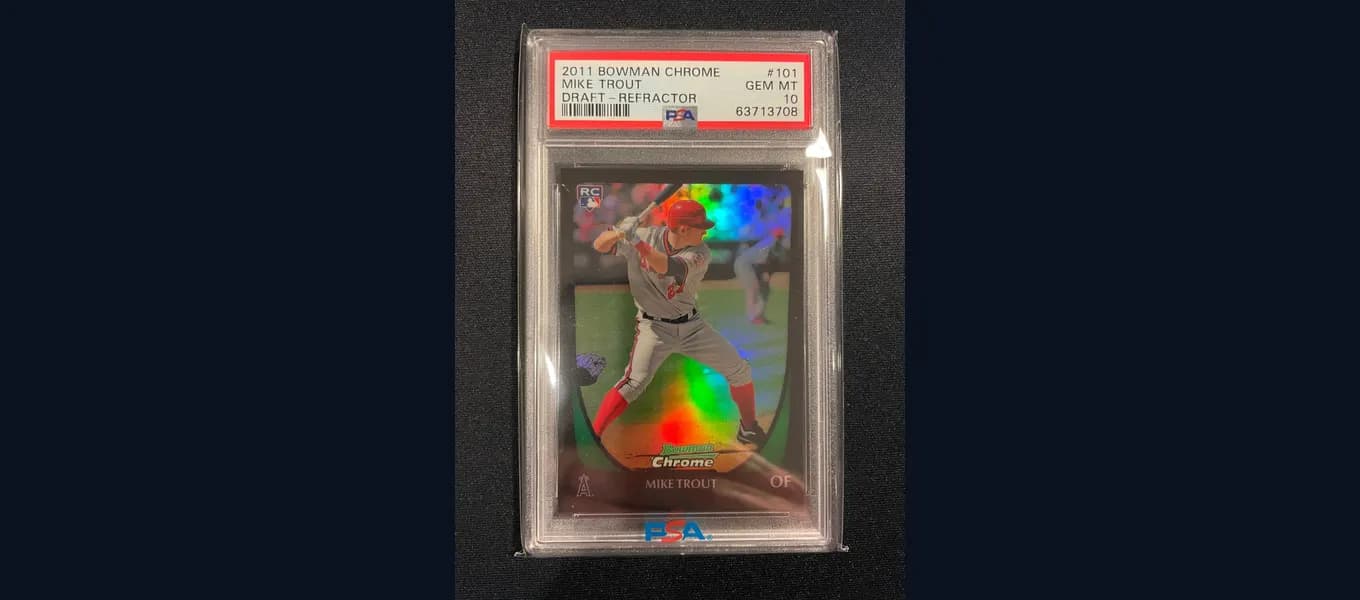
A completed sale is evidence that a buyer paid a price. An active listing only shows what a seller hopes to receive, so it should not be treated as the card's value.
Useful sold-price research depends on an exact match. The same player can have hundreds of cards in one year, and a base card, parallel, autograph, and reprint can produce completely different results.
Use this process for cards that appear important. A representative sample is usually more useful than searching every common card in a large collection.
Identify The Exact Card Before Searching
Start with the year, manufacturer, set or product, player, and card number. Then check whether the card is a variation, insert, parallel, autograph, memorabilia card, or serial-numbered copy.
Search terms should describe the card itself. Do not add words such as rare or valuable unless those words are part of the official set name.
- Base identity: record the player, year, brand, set, and card number from the front and back.
- Card type: check for rookie, insert, autograph, memorabilia, short-print, or variation labels.
- Parallel clues: record the border color, foil pattern, refractor finish, and any printed parallel name.
- Serial number: include a stamp such as 14/50 because a lower print run can change the comparable set.
- Grading details: for a slab, include the grading company, numerical grade, and qualifier shown on the label.
Use Completed Sales Instead Of Asking Prices
Filter marketplace results to sold or completed transactions. Auction archives can also help when they show the final result for the exact card.
Price guides, scanner apps, and automated estimates can help you discover a possible card match. Confirm the result against recent completed sales before you use the number as evidence.
Match The Grade And Condition
A raw card is not directly comparable to the highest graded copy. Grading company and numerical grade also matter because buyers can price two slabs differently even when the card inside is the same.
For raw cards, compare copies with similar centering, corners, edges, surface, print quality, and defects. Use a range when photographs do not show enough condition detail.
| Your Card | Useful Comparable | Weak Comparable |
|---|---|---|
| Raw card with visible corner wear | Recent raw sale with similar wear | PSA 10 sale |
| PSA 8 card | Same card graded PSA 8 | Different company or grade without an adjustment |
| Numbered parallel /99 | Same parallel and print run | Base card or a different color parallel |
| Unopened hobby box | Same year, product, and hobby format | Single packs or a retail blaster |
Check The Sale Date And Terms
Sports card demand changes with player performance, product releases, injuries, retirements, and collector interest. Give more weight to recent sales when the card trades often.
A best-offer listing may display the original asking price instead of the accepted amount on some platforms. Treat that result with care unless the accepted price is shown. Also note whether shipping and buyer premiums are included in the displayed total.
Build A Realistic Price Range
One result can be unusually high or low. Use several close matches when they exist, remove results for the wrong card, and explain why any remaining price spread exists.
- Tight market: several recent exact matches near one price support a narrower range.
- Thin market: few exact sales call for a wider range and more caution.
- Condition spread: raw cards with different defects should not be averaged as if they are equal.
- Lot sales: a group price cannot be assigned fully to the one card you recognize.
- Outliers: a result far above or below the rest needs a reason before it receives much weight.
Apply Sold Prices To A Collection
Do not multiply one strong card's price across an entire box. Search the likely highlights individually, group repeatable mid-value cards, and treat common cards as lots or bulk when that matches how buyers purchase them.
The sum of selected retail sales is also different from a direct offer for the whole collection. Selling costs, labor, time, condition risk, and unsold cards still sit between the evidence and the amount a buyer can pay today.