
How To Identify A Sports Card
Use the player, year, manufacturer, set, card number, variation, parallel, serial number, and grading label to identify the exact sports card.

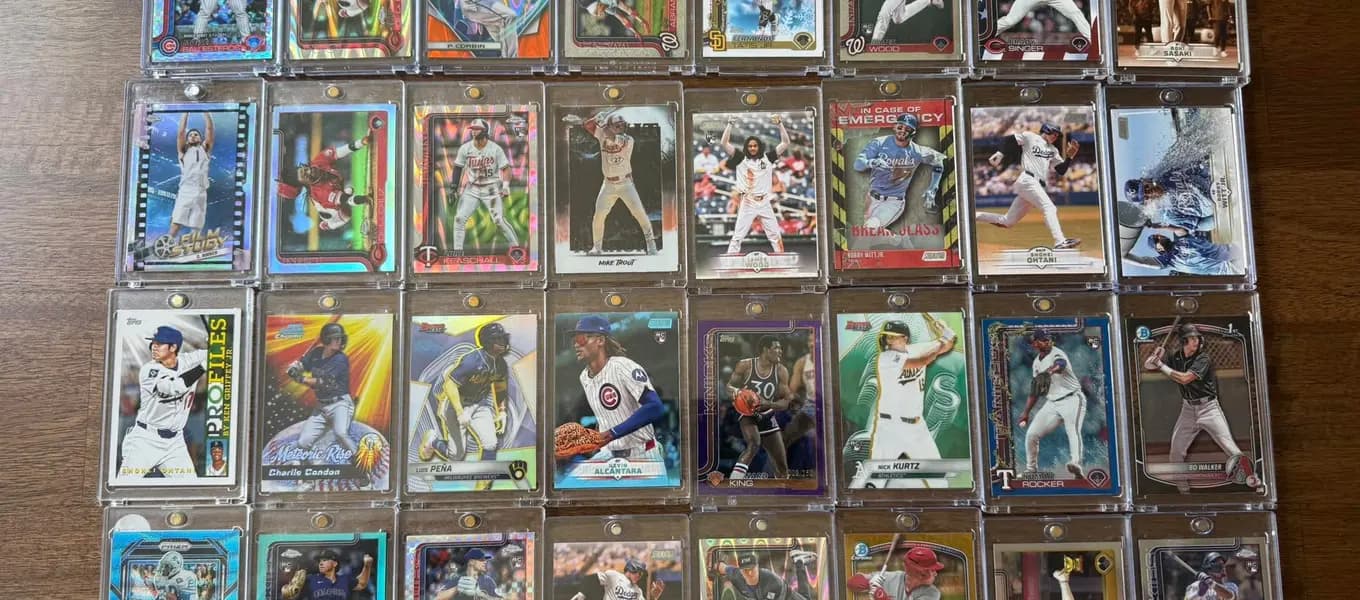
The player name is only the start of a sports card identification. The same player may have base cards, inserts, variations, parallels, autographs, reprints, and cards from several products in the same year.
An exact identification combines the year, manufacturer, set or product, card number, and card type. Those details create a search that can lead to relevant completed sales.
Work from the printed evidence on the card before using an image scanner or price app. Automated matches can confuse cards with nearly identical designs.
Start With The Front And Back
Record the player, team, sport, and any rookie, autograph, memorabilia, insert, or parallel wording on the front. Then turn the card over and look for the card number, copyright line, manufacturer, set name, statistics, and legal text.
- Player: record the full printed name and team shown on the card.
- Year: check the copyright line and the season covered by the statistics because the two can differ.
- Manufacturer: look for names and logos such as Topps, Panini, Upper Deck, Fleer, Donruss, Bowman, or Score.
- Set or product: find the product name and any insert-set name shown in the design or legal text.
- Card number: look for a number near the statistics or set name, which may include letters and symbols.
Do Not Use The Statistics Year Alone
A card often shows statistics through the previous season, so the last year in the table may not be the card's issue year. The copyright line, checklist information, set design, and product name provide stronger evidence when combined.
For vintage cards without a clear copyright year, search the manufacturer, player, card number, team, and visible design. Compare both sides with a trusted checklist or catalog image.
Separate Base Cards From Inserts
A base set follows the main product checklist. An insert belongs to a separate themed checklist inside the product and may use its own numbering, title, or design.
The insert name may appear in small print on the back. Search that name with the player and card number instead of treating every unusual design as a rare card.
Identify Parallels By More Than Color
A parallel uses the same main image or design as another card but changes a feature such as border color, foil, finish, pattern, or serial-number limit. Products can contain many similar parallels.
Record every visible clue and compare it with an official or established checklist. Color alone can be misleading because lighting, scans, and print differences change how a card appears on screen.
| Clue | What It Can Show | What To Record |
|---|---|---|
| Serial stamp | A numbered parallel or limited card | The full format, such as 14/99 |
| Border or foil color | A named color parallel | Exact color and where it appears |
| Reflective pattern | Refractor, Prizm, holo, wave, sparkle, or another finish | Pattern visible under angled light |
| Back text | Parallel, variation, autograph, or insert wording | Exact printed phrase |
| Card code | A possible image variation | The full code and the confirmed checklist match |
Check Autographs And Memorabilia Carefully
A certified autograph card usually contains manufacturer language that guarantees the signature. A signature added after production is different and needs reliable authentication before it can be priced as genuine.
Memorabilia cards may describe the enclosed material on the back. Read the exact wording because it can distinguish player-used, game-used, event-worn, and material with no stated player use.
Read A Grading Label As Part Of The Identity
A slab label usually supplies the year, set, player, card number, grade, and certification number. Verify that the label matches the card and use the grading company plus numerical grade in sold-price searches.
A label can also identify a variation or parallel. Do not assume two slabs are comparable when the grade matches but the card description does not.
Build The Final Search Phrase
Put the identity in a consistent order: year, manufacturer or product, player, card number, and special type. Add the parallel name, serial limit, autograph, or grade only when it applies.
- Base card: year, set, player, and card number.
- Parallel: base identity plus the confirmed parallel name and serial limit.
- Graded card: exact identity plus grading company and numerical grade.
- Variation: exact identity plus the confirmed variation name, not a guess based on one photo.
Photograph Unknown Cards For A Buyer
Send a clear front and back image when you cannot identify a card. Add an angled photo for reflective finishes, a close view of the serial number, and a readable slab label when present.
For a large collection, photograph representative cards from each era and product rather than every common. We can ask for closer images when an identification could affect a possible collection purchase.