
Which Hockey Cards Are Worth Money?
Hockey card value depends on the exact issue, player, rookie status, version, condition, grade, scarcity, demand, and matched completed sales.

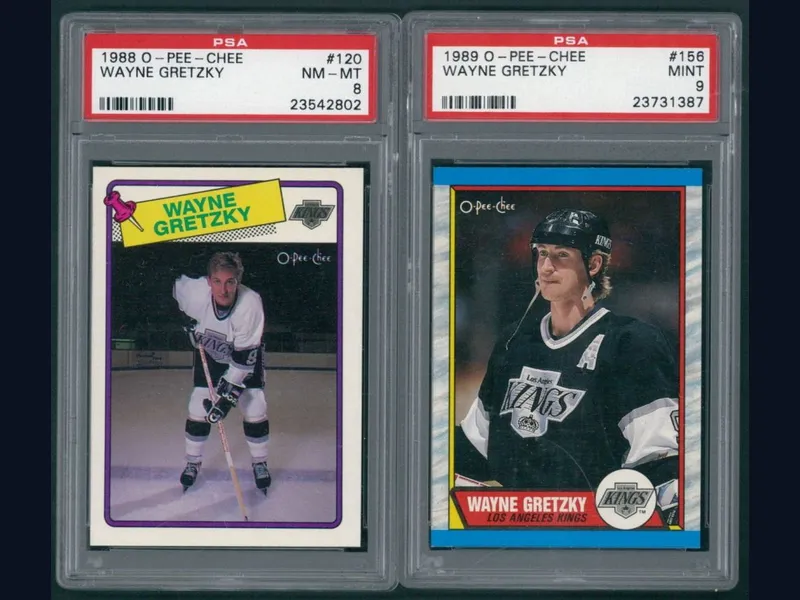
The hockey cards most likely to be worth money are important vintage stars and rookies, recognized modern rookies, scarce parallels, certified autographs, premium inserts, and strong graded examples. The category name is not enough. The exact year, set, card number, version, condition, and player demand decide what a buyer can support.
A familiar name can appear on hundreds of cards. One may be a widely collected rookie, another a common base card, and another a low-numbered parallel. Treating them as the same card produces bad price estimates.
Start With The Exact Hockey Card
Record the year, manufacturer, set, player, card number, language, and any printed variation. Check both sides. A card front may look almost identical across Topps and O-Pee-Chee issues, reprints, tribute designs, and later inserts.
| Card Detail | Where To Check | Why It Matters |
|---|---|---|
| Year and set | Copyright line, checklist, wrapper, or box | Separates the original issue from later designs and reprints |
| Card number | Usually printed on the back | Narrows the card to the correct checklist entry |
| Version | Color, foil, pattern, serial stamp, or checklist | Distinguishes base cards from parallels and short prints |
| Grade | Full grading label and certification number | Allows comparison with the same card in the same numerical grade |
Vintage Stars And Rookies Need Close Review
Vintage hockey value is often concentrated in Hall of Fame players, major rookies, scarce early sets, and cards that survived in better condition. O-Pee-Chee, Topps, Parkhurst, and other issues may cover the same player without carrying the same supply or buyer response.
Do not reject a vintage card because it has wear. A scarce or important card can still have buyer demand with rounded corners, creases, or surface wear. The damage must be reflected in the comparison, but it does not erase the identity of the card.
Young Guns Are A Recognized Modern Rookie Category
Upper Deck Series 1, Series 2, and Extended Series checklists identify Young Guns rookie cards within the base set. Confirm the player and card number against the correct season and series. Canvas, acetate, renewed, and other Young Guns-related versions are separate cards and should not be mixed into one price search.
A Young Guns label does not make every player expensive. Career demand, current collector interest, condition, grade, and the supply of the exact version still matter.
Parallels Autographs And Premium Inserts Can Change The Result
Modern hockey products can contain foil or patterned parallels, serial-numbered versions, certified autographs, memorabilia cards, and rare inserts. Read the card back for certification and product language, then use the manufacturer checklist to confirm the parallel name.
A serial number states the printed limit for that version. It does not guarantee demand. Player, product, design, condition, and buyer interest still control the premium over a base card.
Condition And Grade Must Match The Comparison
Vintage hockey often shows centering problems, rough edges, corner wear, creases, print marks, wax stains, or paper loss. Modern chrome and foil cards can show surface scratches, print lines, dents, and edge damage. Photograph these features instead of hiding them.
For a graded card, search the exact grading company and numerical grade. A higher sale for a different grade is not evidence for the card in hand. Eye appeal can also cause results to vary inside one grade.
Sets Team Lots And Bulk Have Different Value Patterns
Complete vintage sets, near-complete sets, Original Six team groups, player runs, and organized modern sets can have value beyond isolated common cards. Keep set order, labels, and checklists intact so completeness can be reviewed.
Large common accumulations are assessed by era, condition, organization, and volume. Better rookies, stars, inserts, and graded cards should be reviewed separately before the remaining cards are treated as bulk.
Use Completed Sales For The Exact Version
Search the player, year, set, card number, parallel, grade, and autograph or serial details. Remove asking prices, unrelated versions, reprints, lots, and sales with different grades. Use several recent completed sales when possible.
A seller can ask any price. A matched completed sale shows that a buyer and seller agreed. Note shipping, buyer premiums, accepted offers, and unusual sale conditions before forming a range.
How To Show A Hockey Collection To A Buyer
Send wide photos of the boxes, binders, sets, and total quantity. Then send clear fronts and backs of the oldest cards, major rookies and stars, graded cards, autographs, numbered cards, sealed products, and any obvious damage.
We buy hockey cards by themselves or inside mixed sports collections. You do not need to price or inventory every card. The photos help us decide whether the likely collection value supports an in-person cash purchase.