
What Makes A Rookie Card Worth Money?
A rookie label does not establish value. Player demand, the exact issue, scarcity, condition, grade, authenticity, and recent completed sales determine which rookie cards matter.

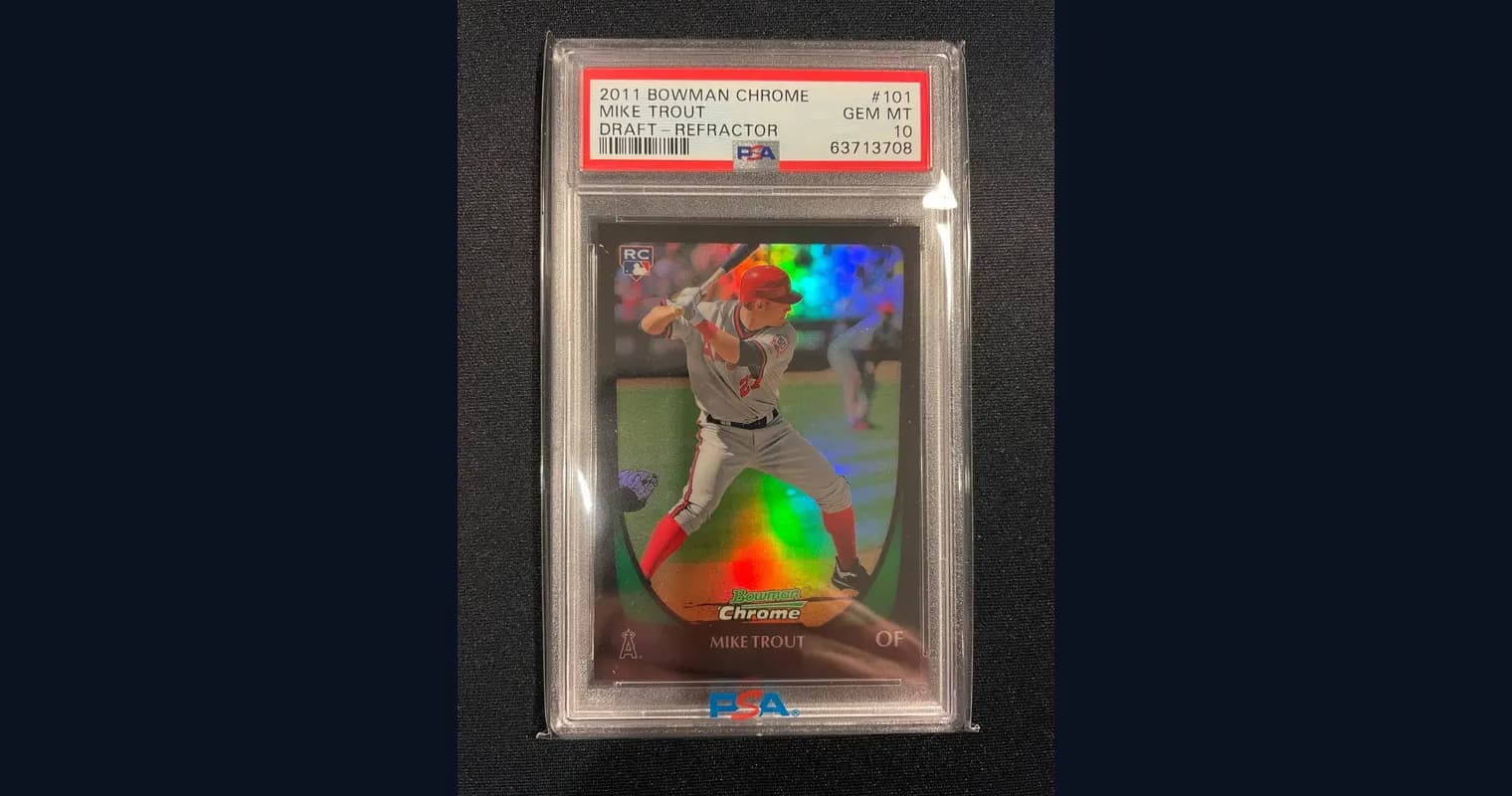
A rookie card is not automatically valuable. Most players have rookie cards, many players appear in several products, and large quantities of modern and mass-produced base rookies can survive.
Value appears when the player has durable collector demand and the exact card has a reason to stand above other issues. Scarcity, autograph status, parallel type, condition, grade, and historical importance can all provide that reason.
Identify the exact card before searching. The same player and season can produce a low-value base rookie and a scarce numbered autograph with a completely different market.
The Rookie Label Is Only One Attribute
Card makers, leagues, and collectors have used different rookie definitions across sports and eras. A card may be described as a prospect card, pre-rookie, first licensed card, first major-release card, or official rookie card.
Use the market's established identity for the exact issue rather than adding a rookie label because the card is early. Completed-sale searches should use the year, set, card number, and accepted card description.
Player Demand Comes First
Collectors pay more for players whose careers, achievements, teams, historical importance, and fan interest create lasting demand. A rookie designation cannot compensate for a player with little collector interest.
Demand for active and recently drafted players can change sharply. Use current completed sales and avoid treating a short market spike as a permanent value.
The Exact Rookie Issue Matters
One player may have cards across flagship, update, prospect, premium, retail, hobby, and online-exclusive products. Each product can also contain inserts, image variations, autographs, memorabilia cards, and many parallels.
| Card Attribute | What To Confirm | Possible Value Effect |
|---|---|---|
| Base issue | Exact product, set, card number, and rookie designation | Often the most common version |
| Parallel | Color, foil, finish, pattern, and official parallel name | Can separate a scarce version from the base card |
| Serial number | Printed limit such as /99, /25, or /1 | Provides direct supply evidence for that version |
| Autograph | Manufacturer certification and whether the signature is on-card or on a label | Can add demand when authenticity is clear |
| Variation | Confirmed image or design difference from a trusted checklist | May have different supply and collector interest |
| Grade | Grading company, numerical grade, qualifier, and label identity | Creates a separate grade-specific market |
Vintage Rookie Cards
Vintage rookie value often depends on player importance, surviving supply, authenticity, and condition. Wear is common, so lower-grade examples of major cards can still attract buyers.
Check for reprints and alterations before using vintage sale results. A genuine card with honest wear is not comparable to a reprint or a card with trimmed edges.
Mass-Produced Rookie Cards
Many rookie cards from the late 1980s and early 1990s were printed and saved in large quantities. Famous players can have inexpensive base rookies when enough clean copies remain.
Check scarce premium issues, confirmed variations, regional releases, inserts, and truly exceptional graded copies separately. Do not assume every printing defect is a recognized valuable error.
Modern Base Rookies And Scarce Versions
Modern base rookies can be easy to find, even for popular players. Value often concentrates in low-numbered parallels, short prints, premium products, autographs, rare inserts, and cards with strong grade-specific demand.
A high-priced sale for one parallel does not set the value of another color or print limit. Match the exact version and use the serial stamp when one is present.
Condition And Grading
Condition matters after the card has demand. Inspect centering, corners, edges, surface, print quality, and alteration risk, then compare raw cards with similar raw cards.
Do not price a raw card as a top grade because it looks clean in a sleeve. Grading makes financial sense only when credible grade outcomes can beat the raw alternative after fees, shipping, selling costs, delay, and risk.
How To Research A Rookie Card
Build the search from evidence printed on the card. Remove every result that does not match the exact issue before interpreting the price range.
- Identify: record the sport, player, year, manufacturer, product, set, and card number.
- Classify: confirm base, insert, variation, parallel, autograph, memorabilia, and serial-number status.
- Match condition: compare raw condition or the exact grading company and numerical grade.
- Filter sales: use recent completed transactions rather than active listings or automated estimates.
- Use a range: give more weight to several close sales and explain outliers or thin evidence.
Rookie Cards Inside A Collection
Do not pull every card marked rookie and assume it deserves individual pricing. Separate major players, scarce versions, autographs, numbered cards, graded cards, and older key issues, then group common base rookies by set, player, or box.
Send clear front and back photographs of the strongest candidates along with wide photographs of the collection. We can identify which rookie groups require closer review as part of a possible collection purchase.