
Which Basketball Cards Are Worth Money?
Basketball card value depends on the player, exact issue, rookie status, scarcity, condition, grade, autograph or parallel type, and recent completed sales.

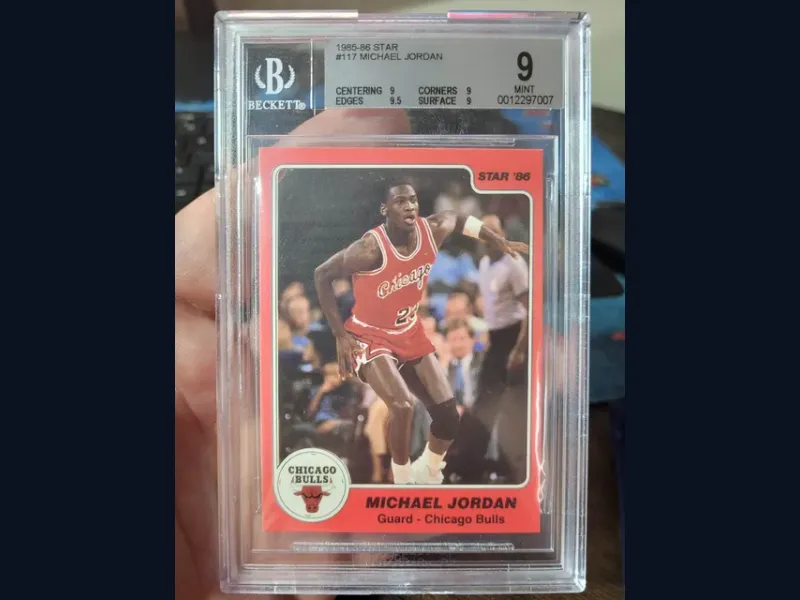
Basketball card value is concentrated in important vintage issues, major rookies, scarce inserts, low-numbered parallels, autographs, premium products, and high-grade cards with strong demand.
The same player can have hundreds of cards across base sets, inserts, parallels, autographs, and online releases. Player recognition helps you choose what to inspect, but the exact card determines the useful sales evidence.
Use era as the first sorting layer. Vintage basketball, mass-produced 1990s base cards, scarce 1990s inserts, 2000s rookies, and current premium cards should not be valued with one rule.
What Makes A Basketball Card Valuable
Strong basketball cards combine demand with a limited or condition-sensitive supply. Check every attribute before using a sold result.
| Attribute | What To Check | Why It Matters |
|---|---|---|
| Player | Historical importance, career demand, team interest, and collector base | Popular players attract more buyers across eras |
| Exact issue | Year, manufacturer, product, set, card number, variation, and parallel | Similar designs can represent different print levels |
| Rookie status | Accepted rookie issue, competing products, and prospect or pre-rookie context | Not every early card receives the same demand |
| Scarcity | Serial number, short print, rare insert, limited product, or surviving supply | Scarcity matters when demand already exists |
| Condition and grade | Centering, corners, edges, surface, defects, company, and numerical grade | Condition separates copies of a wanted card |
| Completed sales | Recent results for the exact raw or graded match | Actual transactions are stronger than asking prices |
Vintage Basketball Cards Through 1986-87
Vintage basketball includes landmark Bowman, Topps, Fleer, and Star issues. Important players, rookie cards, authenticity, scarce formats, and condition drive the strongest results.
This period requires careful identification because production was not continuous and reprints or counterfeits exist for popular cards. Use the dedicated vintage basketball guide for the set-by-set process.
Late 1980s And Early 1990s Basketball
Mainstream base cards from this period often survive in large quantities. Michael Jordan and other stars receive more demand than commons, but many base cards remain inexpensive per card because supply is high.
Check unusual products, errors with confirmed market recognition, premium issues, early inserts, unopened products, and high-grade cards separately. Do not assign a common base card the price of a rare parallel or insert.
Scarce 1990s Inserts And Parallels
Basketball products added more insert sets, refractor-style finishes, parallels, and premium releases as the 1990s progressed. Some of these cards have much lower supply than the base cards around them.
Exact identification is the hard part. Record the product, insert-set name, card number, foil color, finish, pattern, and any numbering before searching.
Basketball Cards From The 2000s
Key rookies, autographs, serial-numbered parallels, memorabilia cards, and premium products can carry much of the value. Base cards from the same boxes may remain common.
A rookie-year player can appear in many products at different price levels. Match the exact product, card number, autograph or memorabilia status, parallel, and grade.
Modern Basketball Cards
Modern basketball often concentrates value in top rookies, low-numbered parallels, short prints, case hits, autographs, premium products, and high-grade examples. Base-card supply can be much larger than the supply of the chase versions.
Active-player demand can change with performance, injury, team changes, and collector attention. Use recent exact sales and do not treat a prior peak as the current value.
Autographs Memorabilia And Serial Numbers
Read manufacturer language carefully. Confirm whether the autograph is certified, whether memorabilia use is stated, and whether the card is a base version or a named parallel.
Serial numbering is one supply clue, but a low number does not guarantee demand. The player, product, design, condition, and buyer market still matter.
Condition And Grading
Modern foil, dark borders, thick stock, autographs, and memorabilia windows can expose chipping, scratches, print lines, and edge damage. Vintage cards present their own centering, corner, stain, and authenticity concerns.
Compare raw cards with similar raw cards and slabs with the exact grading company and grade. Grade only when several credible outcomes can improve the expected net result after all costs.
How To Check A Basketball Card Collection
Sample every era, product, and storage area. A binder of 1990 base cards does not describe a separate box of modern autographs or older graded cards.
- Separate eras: group vintage, mass-produced, late 1990s, 2000s, and modern products.
- Pull key players: separate historically important stars, major rookies, and players with clear collector demand.
- Pull card signals: find inserts, parallels, autographs, serial numbers, graded cards, and sealed products.
- Identify exactly: record the year, product, set, number, parallel, and grade when present.
- Check condition: inspect both sides under light without cleaning or altering the card.
- Use completed sales: match the exact card and explain any price spread before estimating a range.
Selling Basketball Cards
A few cards may carry most of the value, while boxes of base cards sell as sets, player lots, or bulk. Research the likely highlights first and let the expected net result determine whether individual sales are worth the work.
Send wide photographs of the collection and clear front and back images of likely highlights. We can evaluate vintage and modern basketball, graded cards, sealed products, and bulk together for a possible cash purchase.