
Which Baseball Cards Are Worth Money?
Baseball card value depends on the exact issue, player demand, scarcity, condition, format, and completed sales. Use this era-by-era process to find the cards that deserve a closer look.

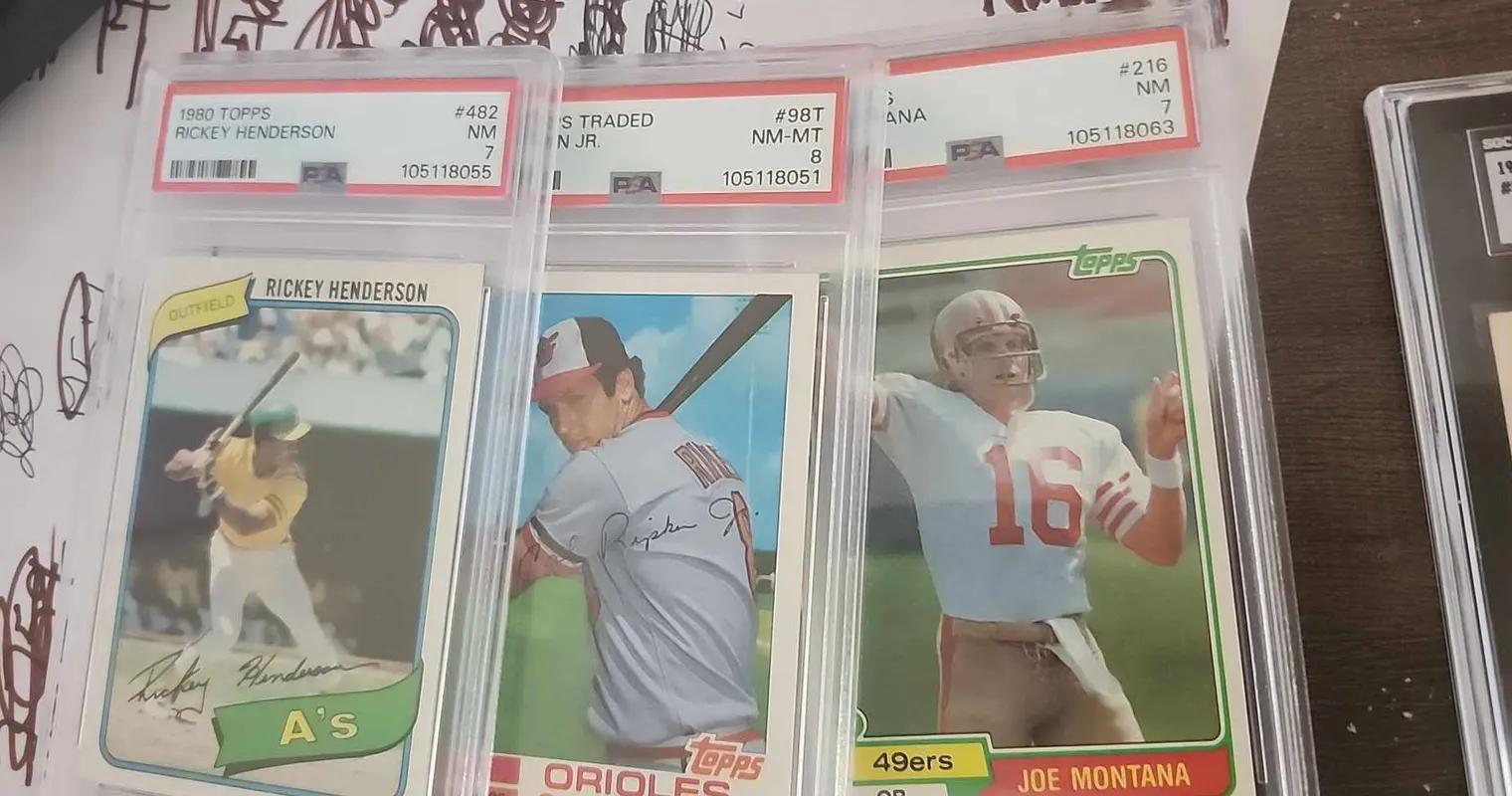
A baseball card is not valuable because it is old, shows a famous player, or appears in a price guide. Value comes from the exact card's collector demand, supply, condition, and recent completed sales.
Baseball covers more card history than any other major sport, so the first useful step is to identify the era and product. A prewar tobacco card, a 1960s Topps star, a 1990 base card, and a modern numbered autograph require different comparisons.
Use this guide to find likely highlights inside a collection. Search exact cards only after you confirm the year, set, card number, variation, parallel, and condition.
The Six Factors That Drive Baseball Card Value
No single factor proves value. Strong cards usually combine several of the signals below, while one weak factor can limit the result.
| Factor | What To Check | Why It Matters |
|---|---|---|
| Exact issue | Year, manufacturer, set, card number, variation, and parallel | Similar designs can have very different supply and demand |
| Player demand | Stars, Hall of Famers, key rookies, and historically important players | A scarce card still needs buyers |
| Scarcity | Known print limits, serial numbers, short prints, regional issues, and surviving supply | Fewer desirable copies can support stronger prices |
| Condition | Centering, corners, edges, surface, print quality, stains, and alteration | Condition separates copies of a card buyers already want |
| Format | Raw, graded, complete set, unopened pack, box, or case | Each format has its own comparable market |
| Sale evidence | Recent completed sales for the closest possible match | A transaction is stronger evidence than an asking price |
Prewar Baseball Cards
Prewar baseball includes tobacco, candy, gum, strip-card, exhibit, and regional issues from before the modern annual-set era. The manufacturer, checklist position, player, authenticity, and condition all matter.
Do not identify a prewar card from the front image alone. Reprints and later commemorative issues can use the same artwork, so photograph both sides and confirm the dimensions, printing, and set details before researching price.
Baseball Cards From The 1950s Through The 1970s
Mainstream vintage baseball value often concentrates in stars, key rookies, scarce series, condition outliers, and complete sets. Commons can contribute meaningful value when they are older, clean, organized, or needed to complete a set.
Condition deserves close attention because creases, writing, stains, paper loss, trimmed edges, and poor centering can change the useful comparable sales. Honest lower-grade copies of important cards can still have demand.
Baseball Cards From 1980 Through 1986
This period includes important rookie cards and several manufacturers, but value is concentrated rather than spread evenly across each set. Identify the exact base, traded, update, premium, or regional issue before comparing it.
A recognizable player does not make every card from the period expensive. Pull major rookies, clean stars, unopened products, and known scarce issues, then group most commons by set or box.
Mass-Produced Baseball Cards From The Late 1980s And Early 1990s
Many base sets from this period were produced and saved in large quantities. That surviving supply keeps most common cards and many star cards inexpensive per card, even when they remain clean.
The era still contains valuable exceptions. Check confirmed variations, scarce premium releases, limited regional issues, inserts, unopened products, and key cards with strong grade-specific demand.
Late 1990s And 2000s Baseball Cards
Base cards may be common, but insert sets, refractors, rare parallels, autographs, game-used memorabilia cards, and serial-numbered issues can carry much of the value. Product and parallel identification are essential.
Some cards from this period have small or unclear print information. Use front, back, foil, finish, serial stamp, and checklist evidence together before choosing a sold-price comparison.
Modern Baseball Cards
Modern value can concentrate in top rookies, prospect cards, autographs, short prints, case hits, low-numbered parallels, and premium sealed products. A player may have many cards in one season, so the rookie logo alone does not identify the strongest issue.
Player demand can change quickly. Give more weight to recent exact sales and do not use a past market peak as the current value without new evidence.
Complete Sets And Unopened Baseball Products
A complete set should be checked for the key cards, variations, overall condition, and consistency. A set can lose much of its appeal when the most important cards are missing or replaced with lower-condition copies.
Keep unopened packs, boxes, and cases sealed. Identify the exact year, product, and configuration, then compare sealed sales rather than adding up possible cards inside.
How To Check Your Baseball Cards
Work from broad groups toward exact cards. Stop before research on low-value commons consumes more time than it can return.
- Sort by era: separate prewar, vintage, early modern, mass-produced, late 1990s and 2000s, and current products.
- Pull value signals: separate stars, rookies, autographs, numbered cards, scarce parallels, graded cards, complete sets, and sealed products.
- Identify exactly: record the year, manufacturer, set, card number, variation, parallel, and grade when present.
- Inspect condition: compare centering, corners, edges, surface, print defects, creases, stains, and possible alteration.
- Check completed sales: use several recent close matches and remove results for different cards or grades.
- Group the remainder: estimate common cards by realistic sets, lots, boxes, or published bulk categories.
Selling A Baseball Card Collection
Selling strong cards individually may produce more gross revenue, but it adds research, listings, fees, shipping, returns, and leftovers. A direct collection sale trades part of that potential retail total for one payment and less seller work.
Send wide photographs of the full collection and close photographs of the likely highlights. We can evaluate vintage cards, modern cards, graded cards, sealed products, complete sets, and bulk together for a possible purchase.