
Which Football Cards Are Worth Money?
Football card value depends on the exact issue, player demand, rookie status, scarcity, condition, grade, autograph or parallel type, and completed sales.

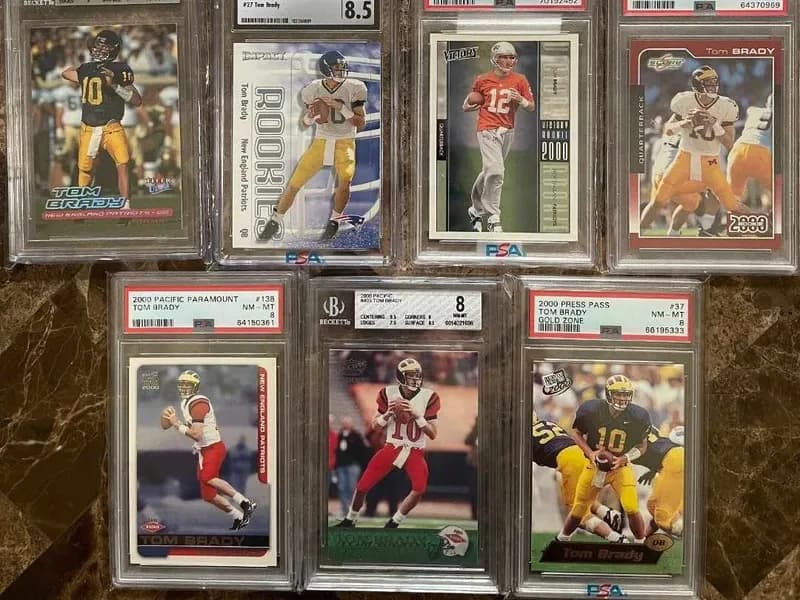
Football card value is concentrated. A small group of important vintage cards, key rookies, scarce parallels, autographs, premium issues, and high-grade cards can account for most of a collection's value.
Quarterbacks often receive strong demand, but position alone does not establish price. The player, exact card, supply, condition, and current buyer activity must work together.
Start by sorting the collection into vintage, mass-produced, late 1990s and 2000s, and modern products. Then identify the strongest candidates before checking completed sales.
What Makes A Football Card Valuable
A useful value estimate connects card identity with market evidence. Check each attribute below before choosing a comparable sale.
| Attribute | What To Check | Why It Matters |
|---|---|---|
| Player | Career importance, team demand, position, and collector interest | Demand is not equal across the checklist |
| Issue | Year, manufacturer, set, card number, variation, and parallel | One player can have many cards with different supply |
| Rookie status | Accepted rookie identity and competing rookie-year products | The preferred rookie issue may receive more demand |
| Scarcity | Short prints, serial numbers, rare inserts, and limited releases | Lower supply can matter when buyers want the card |
| Condition | Centering, corners, edges, surface, print defects, and alteration | Condition separates copies of an established card |
| Sale evidence | Recent completed sales for the exact raw or graded match | Asking prices do not prove what buyers paid |
Vintage Football Cards
Early national sets, important rookie cards, stars, scarce series, and condition outliers can carry value. Jim Brown, Johnny Unitas, Joe Namath, Bart Starr, Walter Payton, and other historically important players deserve closer identification.
Vintage football can include different manufacturers, sizes, and regional issues. Check both sides for year, set, card number, and reprint clues before searching by player name.
Football Cards From The 1980s
Value in 1980s football often concentrates in key rookies, stars, clean condition outliers, and unopened products. The 1986 Topps Jerry Rice rookie is one familiar example of a card where exact condition and grade can matter.
Most cards around a key rookie may remain common. Keep complete sets and labeled groups intact until the important cards and overall condition are documented.
Mass-Produced Football Cards From The Late 1980s And Early 1990s
Large surviving quantities keep many base cards inexpensive per card. Stars and rookies still deserve a look, but clean condition alone does not make a common issue scarce.
Check premium releases, inserts, confirmed variations, unopened products, and cards with established high-grade demand. Treat unsupported error claims cautiously.
Late 1990s And 2000s Football Cards
Scarce inserts, serial-numbered cards, autographs, premium rookies, and memorabilia cards can carry the value in this period. Product identification matters because one player can have many base and parallel versions.
A major rookie can have several accepted issues with different demand. Match the exact brand, set, card number, parallel, autograph status, and grade.
Modern Football Cards
Modern value often follows key rookies, low-numbered parallels, short prints, case hits, autographs, premium products, and strong graded examples. Base rookies can be plentiful even when the player is popular.
Demand for active players can move quickly with performance, injury, role, and collector attention. Use recent completed sales and avoid carrying an old peak price into the current estimate.
Quarterbacks And Other Positions
Quarterbacks often lead football-card demand because the position receives attention and long-term historical comparison. Running backs, wide receivers, defensive players, and specialists can still have important cards when the player and issue have established demand.
Do not price every quarterback rookie as a future star. The card market can react before a career is established, so current prices include uncertainty as well as collector interest.
Autographs Parallels And Serial Numbers
Read the card and checklist carefully. Confirm whether an autograph is manufacturer-certified, whether a memorabilia card has stated use, and which parallel name matches the color or finish.
Record serial numbering exactly. A sale for a card numbered to 10 is not a direct comparable for the base card or a parallel numbered to 299.
How To Check A Football Card Collection
A representative review can find the likely value without a full inventory. Sample every era and product instead of judging the collection from one box.
- Separate eras: pull vintage, 1980s, mass-produced, late 1990s and 2000s, and modern products into clear groups.
- Pull signals: separate major players, rookies, autographs, numbered cards, parallels, graded cards, and sealed products.
- Identify exactly: record the year, product, set, card number, version, and grade when present.
- Inspect condition: check both sides for centering, corners, edges, surface, defects, and alteration.
- Use sold evidence: compare several recent exact sales rather than active listings or a different parallel.
- Group commons: estimate the remaining cards by set, player lot, organized box, or bulk category.
Selling Football Cards
Strong individual cards may justify separate listings, grading, consignment, or auction research. A complete collection sale may fit better when one payment, local pickup, and no leftover boxes matter more.
Send photographs of the full collection plus clear fronts and backs of likely highlights. We can evaluate vintage, modern, raw, graded, sealed, and bulk football cards together for a possible cash purchase.