
What Makes A Complete Sports Card Set Valuable?
Complete-set value depends on the exact checklist, key cards, missing cards, variations, condition consistency, era, packaging, scarcity, demand, and completed sales.

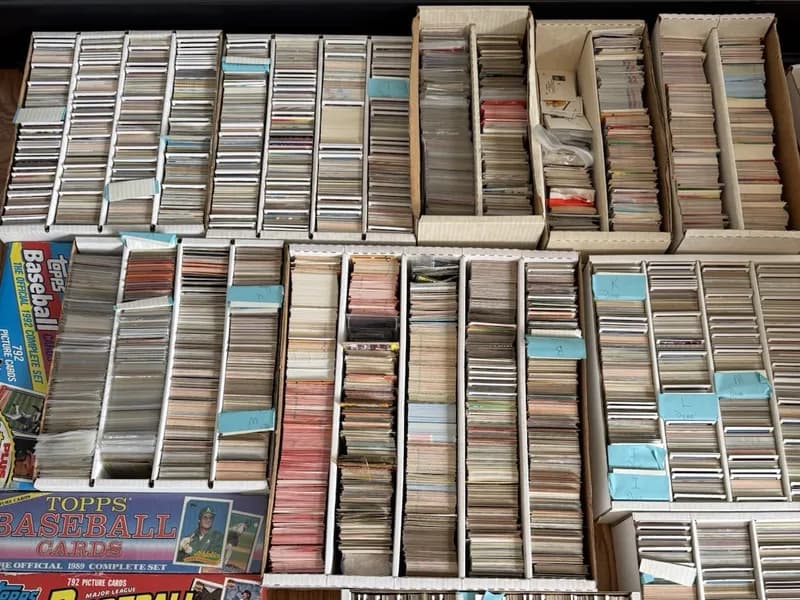
A complete sports card set is more than a box with the expected card count. The exact checklist, key cards, variations, condition consistency, packaging, and collector demand determine whether completeness adds meaningful value.
Some sets are valuable because they contain important rookies or stars. Others have scarce high numbers, short prints, regional distribution, premium production, or condition challenges. Many mass-produced sets remain inexpensive because complete examples are easy to find.
Identify the exact set and confirm what complete means for that product before adding individual card prices or comparing a sold result.
Identify The Exact Set
Record the year, manufacturer, sport, set name, series, update or traded designation, and expected checklist size. Factory sets, hand-built sets, team sets, insert sets, and master sets are different products.
Use the outer box, checklist cards, card backs, copyright lines, and numbering sequence together. Similar packaging can contain a base set, an update set, or a partial run.
Define What Complete Means
A base set usually contains each card on the primary checklist once. A master set may add variations, short prints, inserts, or other subsets, so the word complete needs a stated boundary.
| Set Type | What Complete Usually Requires | Common Source Of Confusion |
|---|---|---|
| Base set | Every card on the main numbered checklist | Missing high numbers, short prints, or cards placed in another box |
| Factory set | Original manufacturer package with the promised contents | Opened packaging, missing bonus cards, or mixed replacement cards |
| Hand-built set | One correct copy of each checklist card | Condition varies because cards came from different sources |
| Update or traded set | Every card in the separate update checklist | Mistaking it for part of the main base set |
| Insert set | Every card in one named insert checklist | Mixing several parallels or insert families |
| Master set | The specifically defined base, variation, short-print, and insert scope | No universal definition across products or collectors |
Confirm The Key Cards Are Present
A set can be technically near complete while missing most of its market value. Key rookies, major stars, scarce series cards, variations, and condition-sensitive cards may account for a large share of the total.
Check the strongest cards against the correct checklist, but preserve the set order. If a key card was graded or stored separately, document that it remains part of the set before a sale discussion.
Review Condition Across The Set
Set buyers care about condition consistency as well as the best card. A clean key rookie inside a set with widespread creases, stains, writing, or water damage does not make the entire set high grade.
Sample the beginning, middle, and end of each series. Check centering, corners, edges, surface, print quality, stains, and storage damage on both stars and commons.
Check Variations Short Prints And Series
Some sets contain recognized variations, corrected cards, high-number series, or short prints. A complete base checklist may not include every variation, while a seller's master-set claim may require them.
Use a reliable checklist and record which version is present. Do not treat random print defects as checklist variations without established identification and buyer demand.
Era And Surviving Supply Matter
Older complete sets can be difficult to assemble because fewer cards survived and condition varies. Sets from heavily produced periods may remain common because collectors saved factory sets and built sets in large numbers.
Modern set value may depend on product tier, short prints, variations, and whether major rookie cards are part of the base checklist. Card count or original retail price does not establish current demand.
Factory Sets Need Packaging Review
An unopened factory set should remain sealed. Photograph the label, wrap, seals, corners, dents, tears, fading, and any bonus-card statement without adding tape or replacement wrap.
An opened factory box can still contain a complete set, but it should be described as opened. Compare it with other opened complete sets rather than sealed examples.
Use Complete-Set Sales As Evidence
Search for the exact year, manufacturer, set, format, completeness, and condition. A sealed factory set, opened factory set, hand-built set, partial set, and graded registry-quality set should not share one comparison.
Use several recent completed sales when possible. Check whether shipping or buyer premiums are included and whether the listing disclosed missing cards or condition problems.
Should You Break A Set Apart?
Removing key cards can raise the gross result when those cards have strong individual markets, but it leaves a partial set and adds listing, grading, shipping, and selling work. The correct comparison is expected net proceeds under both plans.
Do not break apart a set before a buyer or auction house confirms how it would be handled. Existing order and completeness are easier to preserve than rebuild.
How To Present A Set To A Buyer
Photograph the outer container, checklist, representative rows or pages, key cards, and any condition problems. Include the year, set name, whether it is factory or hand built, and which cards are known to be missing.
We buy complete and partial sets by themselves or within larger collections. We can explain whether the likely value sits in completeness, individual key cards, sealed packaging, or the remaining cards as organized lots.