
How To Sell A Sports Card Collection
A step-by-step plan for deciding what you have, how much work to do, where to sell, and how to complete the sale without wasting time or missing the valuable cards.

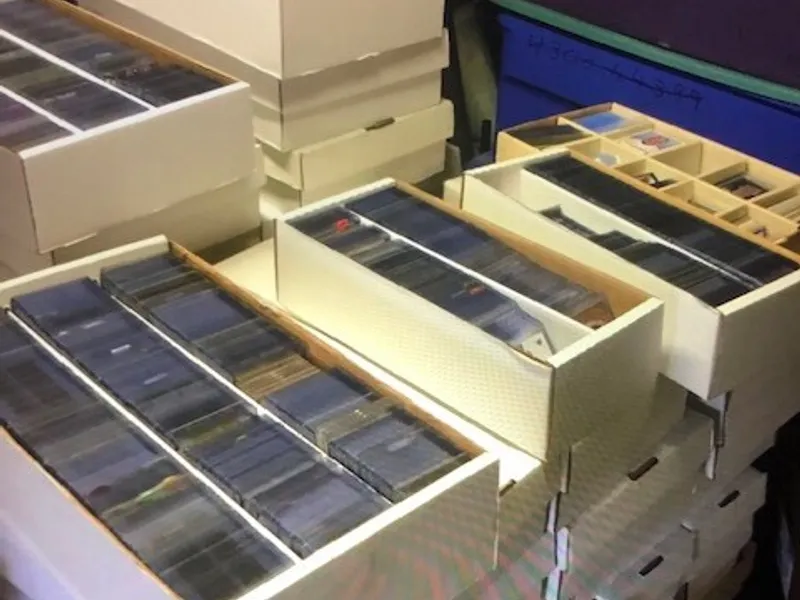
Selling a sports card collection can mean two very different jobs. You can sell the best cards one at a time and spend months handling the work, or you can sell the complete collection to one buyer for a faster result.
The right choice depends on the cards, the time you can spend, and whether you care most about the highest possible gross sales or a clean transaction. You do not need a complete inventory before you make that decision.
This process helps you find the likely value, protect the important cards, compare sale methods, and prepare enough evidence for a serious buyer to respond.
Step 1: Decide What Result You Want
Start with the outcome, because it controls how much work makes sense. A seller who needs an estate cleared this month should not follow the same plan as a collector who enjoys listing cards every night.
- Highest gross sales: sell strong cards one at a time and accept the fees, labor, returns, and unsold leftovers.
- Highest useful net: compare the money you keep after costs with the hours and months needed to earn it.
- Fast complete sale: sell the collection to one buyer and transfer the sorting, listing, shipping, and storage work.
- Partial sale: keep personal cards, then define exactly which boxes and cards are part of the transaction.
Step 2: Learn The Shape Of The Collection
You need a useful summary, not a card-by-card spreadsheet. Record the main sports, date ranges, number of boxes, graded cards, sealed boxes, binders, complete sets, and any group that was kept separate.
Then pull likely highlights. Start with older cards, stars, Hall of Famers, rookies, autographs, numbered cards, rare parallels, graded cards, and sealed product. Do not assume every rookie or old card is expensive.
Step 3: Check The Likely Value
Use completed sales for exact cards whenever possible. Match the year, set, card number, variation, grading company, grade, and condition. Active listings can help identify a card, but an asking price does not prove what a buyer will pay.
Price the important cards first. Group common cards by era, sport, set, or box rather than adding an optimistic single-card price to thousands of commons. A realistic sample tells you more than a huge total built from unmatched listings.
Step 4: Compare Selling Methods
Every selling method exchanges money for time, labor, convenience, and risk. Compare what you are likely to keep, not only the top-line sale price.
| Method | Best Fit | Main Tradeoff |
|---|---|---|
| Sell each card online | Valuable singles and sellers with time | Fees, photos, listings, shipping, returns, and leftovers |
| Consignment or auction | Strong cards that fit the seller's audience | Commission, timing, terms, and uncertain results |
| Card show or private sale | Collectors who know the cards and local market | Travel, negotiation, security, and limited buyer reach |
| Local card shop | Small collections and quick local transactions | The shop may only want selected inventory |
| Direct collection buyer | Complete collections and sellers who want one transaction | Cash offer is below the possible retail total |
Step 5: Prepare Photos And Questions
Photos let a buyer judge the scale and card mix before anyone travels. Start with every box, shelf, tote, binder, graded-card case, and sealed product. Then add close photos of representative cards and likely highlights.
Ask how the buyer calculates an offer, whether the offer covers the whole collection, how payment works, who handles loading, and what can change the number during the inspection. Clear terms matter as much as the first quote.
Step 6: Review The Offer Against Your Goal
A direct buyer works backward from expected resale value and accounts for selling costs, labor, time, condition, travel, storage, and risk. That offer should be compared with your realistic net from other methods, not with a best-case retail sum.
You can decline an offer. If you accept, confirm which cards are included, the final payment amount, payment method, pickup date, and loading plan before the cards leave your possession.
Step 7: Complete A Safe Transaction
Keep valuable cards secure until payment is confirmed. For a large pickup, make a clear path to the boxes and tell the buyer about stairs, narrow doors, loose storage, or heavy shelving before the visit.
A good complete sale should leave no confusion about the price, the cards, or the work. If you want one buyer for the collection, send photos first and let the buyer tell you what other details are needed.