
How To Store Inherited Sports Cards Before Selling
Protect inherited sports cards from moisture, heat, sunlight, pressure, pests, handling, and lost documentation while the family decides what to keep or sell.

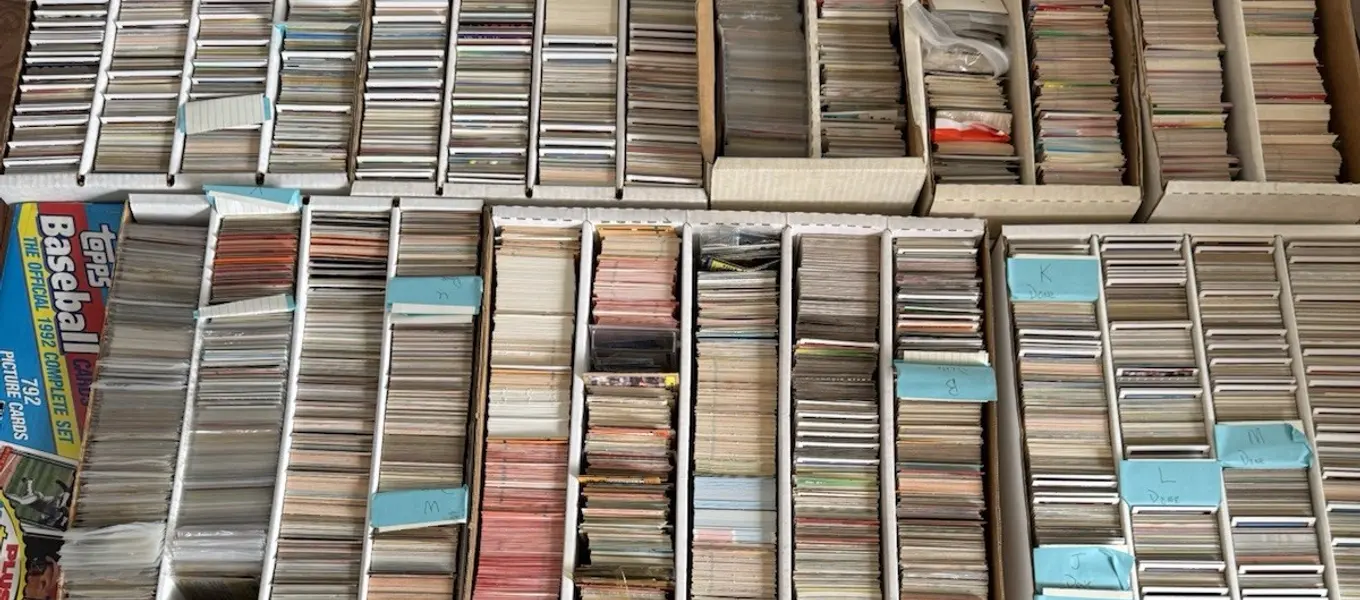
The safest short-term plan for an inherited sports card collection is usually to preserve its current organization and move it away from obvious hazards. You do not need to buy new holders for every card before a sale decision.
Moisture, heat, direct sunlight, pressure, pests, and unnecessary handling can reduce condition. Labels and records can also disappear when a family repacks the collection too quickly.
Photograph the collection first, then make only the moves needed to protect it. Keep a simple record of any box, binder, or display that changes location.
Choose A Dry And Stable Indoor Location
Use a finished indoor room with stable temperature and low moisture risk. Avoid garages, sheds, hot attics, damp basements, laundry areas, and locations near plumbing, floor drains, exterior doors, or windows that leak.
Keep the collection away from direct sunlight and heating or cooling vents. Rapid temperature changes can encourage condensation, while sunlight can fade cards, labels, autographs, and packaging.
Keep Boxes Off The Floor
Raise card boxes above concrete and any floor that could receive water. Use sturdy shelving or a stable platform that can support the total weight without bowing or tipping.
Do not stack heavy totes on card boxes, binders, display cases, or sealed products. Crushed containers can bend cards and damage corners long before the outside of the stack looks unsafe.
Preserve The Collector's Organization
Keep labeled sets, player groups, team groups, binders, and graded-card cases together. Photograph each label and shelf position before moving it.
If a weak box needs support, place the whole closed box inside a stronger outer container. Do not pour its cards into another box or combine rows simply to save space.
Handle Raw Cards By Their Edges
Wash and dry your hands before handling cards, then hold them by the edges over a clean surface. Keep food, drinks, smoke, cleaning products, and adhesives away from the work area.
Do not clean surfaces, erase marks, flatten creases, press cards, trim edges, recolor damage, or remove residue. An attempted repair can create more damage or raise alteration concerns.
Use Existing Holders Unless They Create A Risk
Leave cards in sleeves, top loaders, semi-rigid holders, magnetic holders, and graded slabs when the holder is clean and stable. Repeated removal creates more chances for scratches, fingerprints, and corner damage.
Do not force a card out of a screw-down holder or damaged case. Photograph the holder and ask an experienced card professional for help when removal could harm the card.
| Format | Safe Short-Term Treatment | Avoid |
|---|---|---|
| Raw cards in boxes | Keep upright with light support so rows do not collapse | Overpacking, loose movement, rubber bands, tape, and heavy pressure |
| Binder pages | Store binders upright when pages hang correctly, or flat in a small stable stack | Overfilled rings, leaning piles, and heavy boxes on top |
| Graded slabs | Keep in a fitted case or upright box with enough padding to prevent movement | Loose piles that scratch cases or strike slab edges |
| Sealed packs and boxes | Preserve original wrapping and support the package without crushing it | Opening, retaping, shrink-wrapping, or stacking heavy items above it |
| Framed or displayed cards | Photograph the display and protect it from sunlight and impact | Taking it apart before identity and mounting method are known |
Check Binders Without Rebuilding Them
Look for split pages, sticky surfaces, overfilled pockets, bent ring mechanisms, and cards pressed against metal. Turn pages slowly from a supported edge and stop if cards appear stuck.
Do not remove every card to replace old pages before you know whether the work is necessary. Document the issue and prioritize only cards that face an immediate damage risk.
Protect Sealed Products And Graded Cards
Unopened packs, boxes, and cases should remain sealed. Photograph the product name, year, format, seals, wrapping, dents, tears, and any labels without adding new tape or wrap.
Graded slabs should remain intact. Record the grading company, label, numerical grade, and certification number, then store the slabs so they cannot fall or rub against hard surfaces.
Watch For Water Mold And Pests
Inspect the storage area and the outside of containers for dampness, staining, odor, insect activity, and rodent damage. Do not move a visibly contaminated box through clean parts of the collection.
Separate the affected container from clean material and document what you see. Mold and pest cleanup can affect health and property, so contact an appropriate remediation professional when the problem extends beyond isolated card damage.
Keep Records With The Collection
Preserve receipts, inventory lists, grading submissions, auction records, correspondence, certificates, and handwritten notes. Photograph documents before moving them and record which box or card they describe.
Do not attach notes directly to cards or holders with tape. Use labeled outer bags, separate folders, or a simple digital photo log to keep the relationship clear.
Prepare For Photos Or A Buyer Visit
Clear a safe path to the collection, but do not carry everything outside or stage loose cards across a floor. Wide photographs, representative open boxes, labels, and close images of likely highlights are enough to begin.
Tell the buyer about water exposure, smoke, pests, crushing, stuck cards, or unstable containers before the visit. Honest storage information supports a more accurate review and a safer pickup plan.