
How To Value An Inherited Sports Card Collection
Estimate an inherited collection by documenting its scope, identifying representative groups, checking likely highlights, and using matched completed sales without pricing every card.

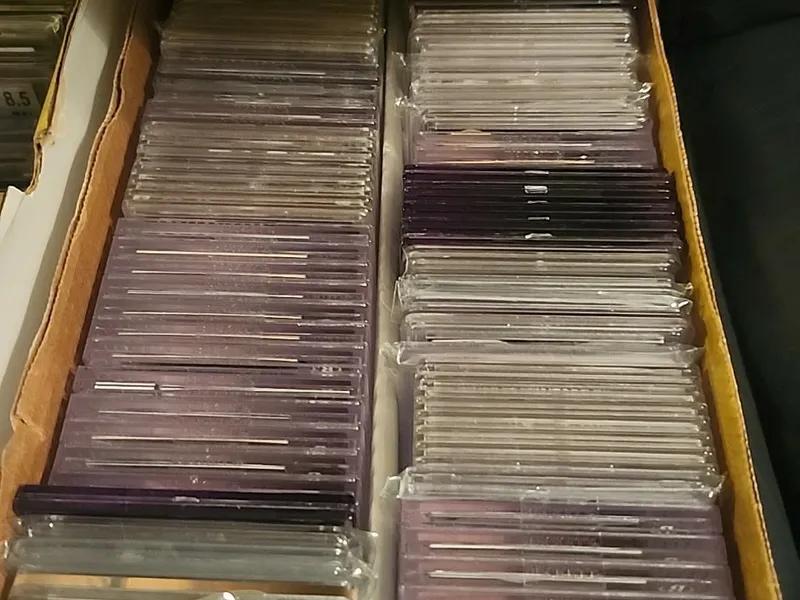
An inherited sports card collection rarely comes with a current inventory. It may include labeled sets, loose cards, binders, graded cards, unopened products, and boxes that the family has never opened.
You do not need to price every card to estimate the collection's market context. A structured sample can show where the value is concentrated and which sections should receive closer research.
This process is for a practical sale decision. A buyer evaluation or market estimate is not a certified appraisal for tax, probate, insurance, charitable donation, or legal use.
Document The Collection Before Moving It
Take wide photographs of every box, binder, tote, display case, graded-card case, and sealed item. Capture shelf order and handwritten labels before anything is moved or separated among family members.
Keep receipts, inventory lists, grading paperwork, auction records, and the collector's notes with the cards. These records can help identify purchases, but an old price or insurance amount is not current sale evidence.
Describe The Scope With Useful Counts
Count containers instead of individual cards. Record the number and stated capacity of long boxes, set boxes, binders, graded holders, sealed boxes, and loose groups.
A box capacity gives a rough range rather than an exact total. Thick modern cards, top loaders, partitions, and partially filled rows all change the number of cards inside.
| Collection Group | What To Record | Why It Matters |
|---|---|---|
| Card boxes | Box count, stated capacity, labels, fullness, and general years | Shows scale, era, organization, and likely bulk volume |
| Binders | Number of binders, sports, years, players, and representative pages | Shows whether binders contain sets, stars, or mixed cards |
| Graded cards | Grading company, card identity, numerical grade, and quantity | Supports exact grade-matched research |
| Sealed products | Year, manufacturer, product, format, wrapping, and condition | Unopened products have a separate market from loose cards |
| Protected groups | Top loaders, magnetic holders, display cases, or separate small boxes | May show which cards the collector considered important |
Use The Years To Choose A Starting Point
Year ranges help determine where to look first, but they do not settle value. Older cards are not automatically expensive, and modern cards can carry value through autographs, low serial numbers, scarce parallels, and premium products.
- Before 1980: review stars, rookies, complete sets, regional issues, and unopened material card by card when practical.
- 1980 to 1986: pull key rookies, stars, traded or update sets, and clean complete sets.
- Late 1980s and early 1990s: expect many mass-produced base cards, but check premium issues, confirmed variations, inserts, and key rookies.
- Late 1990s and 2000s: look closely for scarce inserts, serial-numbered cards, autographs, memorabilia cards, and key rookies.
- 2010 to present: separate autographs, numbered parallels, short prints, case hits, top rookies, graded cards, and sealed hobby products.
Sample Every Distinct Section
Do not judge the entire collection from the first open box. Sample each labeled year, sport, set, shelf, binder, and storage area because the card mix can change sharply from one section to the next.
Photograph representative rows and several card backs. Card backs help confirm years, manufacturers, set names, and card numbers when the front designs are unfamiliar.
Pull The Likely Value Signals
The most valuable cards may represent a small share of the total count. Set aside likely highlights for identification without changing the order of the remaining collection.
- Older stars and rookies: focus on recognized players, scarce issues, and cards that were protected separately.
- Autographs and memorabilia: read the manufacturer wording and keep any matching certificates or packaging.
- Serial-numbered cards: record the full stamp and identify the exact parallel or insert.
- Graded cards: search the exact card, grading company, numerical grade, and any qualifier.
- Sealed products: keep packs and boxes closed, then identify the exact year, product, and format.
- Collector signals: review separate cases, top loaders, notes, purchase records, and display pieces without assuming the holder proves value.
Research Exact Cards With Completed Sales
Identify the year, manufacturer, set, player, card number, variation, and parallel before searching. For graded cards, match the grading company and numerical grade. For raw cards, compare copies with similar visible condition.
Use recent completed sales when close matches exist. Ignore active asking prices as proof of value, and do not assign a raw card the price of a top-graded copy.
Estimate The Rest By Marketable Groups
After the important cards are separated, estimate the remaining material by the way it can realistically sell. Complete sets, player groups, organized star lots, unopened products, and bulk commons each have different markets.
Do not multiply a single-card asking price across thousands of common cards. Large quantities can add up, but the per-card value of common material is usually low and depends on era, sport, condition, organization, and buyer demand.
Choose The Amount Of Research That Changes The Decision
More research is useful when it can reveal a missed high-value card or change the sale method. It is less useful when it turns tens of thousands of common cards into a months-long inventory project.
A family that wants the highest possible gross sales may research and sell strong cards individually. A family that values one local transaction can send representative photos to a collection buyer and compare the offer with the expected net result of doing the work themselves.
Prepare A Clear Buyer Summary
Send the city, rough box or card count, sports, year ranges, storage history, graded-card count, sealed products, and photographs of likely highlights. State whether the family wants to sell the entire collection and mention any deadline.
We can use that summary to decide whether the collection fits what we buy and what additional photos would help. If it fits, we can discuss a possible cash purchase and in-person pickup without requiring a complete inventory first.